Newcastle sits in a genuine termite-pressure zone. The mild, humid coastal climate keeps colonies foraging much of the year — which is why the yearly check matters here more than most people think.
Termite hazard rises with warmth and humidity. The tropical north is the worst of it, but coastal New South Wales — Newcastle included — is a genuine, year-round-leaning pressure zone, well above the cooler inland and southern regions.
The most destructive species in Australia, Coptotermes, is at home along this coast. A colony can be metres from the house, working through a fence, a stump or a garden sleeper, and reach your timber without ever showing on the surface.
The honest bit: nobody can tell you over the phone whether you have termites, and no website can. What we can tell you is that on this coast the risk is real enough to check for — properly, once a year.
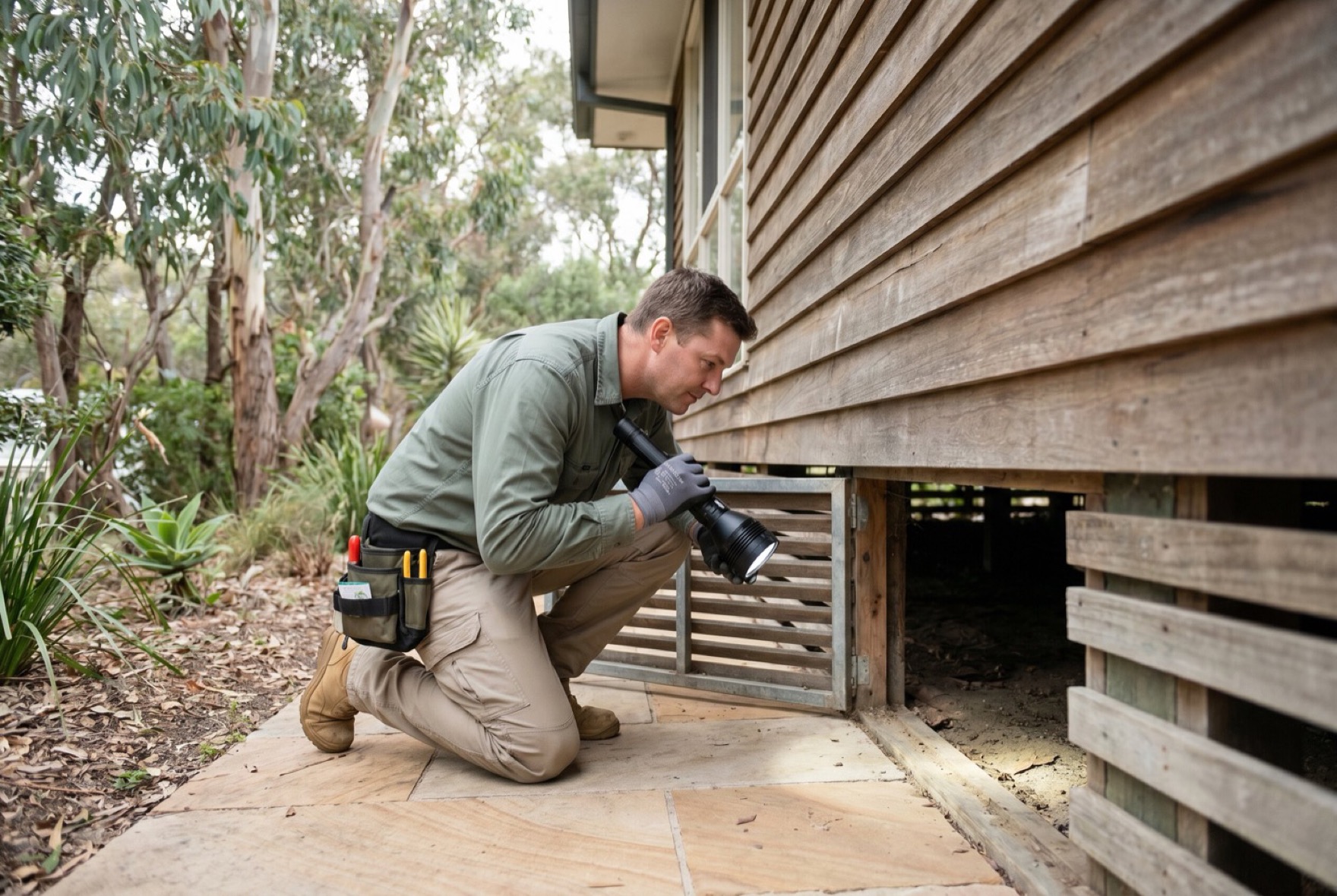
There's no honest shortcut. A recommendation only means something after a proper look — so that's where every termite job starts.
A thorough timber-pest inspection to AS 4349.3 and AS 3660.2 — subfloor, roof void, interior, and the perimeter — looking for activity, damage and the conducive conditions that invite termites in. You get a written report, not a verbal maybe.
A liquid termiticide treated zone in the soil around and under the building, to AS 3660. Modern non-repellent chemistry works because termites can't detect it — they pass through, and carry it back to the colony. Applied by trenching or drilling and injecting.
In-ground and above-ground stations that termites feed on and share through the colony, eliminating it over weeks. Also the ongoing early-warning system — stations checked on a cycle so activity is caught before it's a problem.
Which path suits your home depends entirely on what the inspection finds and how it's built — a slab home and a raised timber cottage call for different approaches. We describe the method plainly and quote after we've looked; we don't publish prices online.
If you spot any of these, the honest advice is the same: don't disturb it, and book an inspection. Disturbing active termites makes them scatter and harder to treat.
Found something? Leave it be and tell us where you saw it — we'll prioritise the inspection. Covering it back up or spraying it yourself only sends the colony somewhere you can't see.
A termite inspection is the cheapest, calmest step in the whole business — long before anything's gone wrong. Tell us about your home and we'll book you in.
Book a termite inspection